African Startups Raised $1.195 Billion in H1 2026. Here Are 9 Things That Shaped the Half Year

African startups tracked by Klari raised $1.195 billion in disclosed funding across 177 deals in H1 2026.
The first half of 2026 showed a startup funding market that is recovering, but not evenly. While investors continued backing companies across the continent, a large share of capital flowed into a small number of established startups raising sizeable rounds.
The five largest funding rounds alone accounted for more than $470 million of disclosed capital, highlighting a market where investors are increasingly concentrating capital behind companies with proven traction and clear growth opportunities.
Mobility emerged as the largest-funded sector by capital, driven by major financing rounds from companies such as Spiro, while Fintech remained the most active sector by number of deals.
Kenya led Africa by disclosed capital raised, Nigeria recorded the highest number of funding deals, and Francophone African markets including Ivory Coast and Togo recorded notable funding activity.
Beyond the headline numbers, H1 2026 revealed a few important trends:
-
Capital is returning, but large rounds are shaping the market.
-
Mobility attracted more funding than Fintech, although Fintech remained the busiest sector.
-
Kenya led by funding volume, while Nigeria maintained its position as Africa's most active startup market.
-
Debt financing became a major source of startup capital
-
Smaller ecosystems are producing standout companies capable of attracting institutional capital.
Key Numbers
-
Funding events tracked: 177
-
Deals with disclosed amounts: 134
-
Disclosed funding tracked: $1.195B
-
Countries with tracked funding activity: 19
-
Largest funding round: $215M (Spiro, Kenya)
-
Largest funding market: Kenya
-
Most active funding market: Nigeria
-
Largest-funded sector: Mobility
-
Most active sector: Fintech
7 Major Insights
1. A handful of large rounds shaped Africa's H1 funding picture
African startups attracted almost $1.19 billion in disclosed funding in the first half of 2026. However, the headline figure was heavily influenced by a small number of large financing rounds.
The largest deals of the period were:
- Spiro, Kenya: $215M
- SolarAfrica, South Africa: $91.8M
- valU, Egypt: $63.6M
- Spiro, Kenya: $55M
- Spiro, Kenya: $50M
- Breadfast, Egypt: $50M
- MNT-Halan, Egypt: $41.3M
- Blnk, Egypt: $37M
This concentration reflects a broader shift in startup funding: investors remain willing to deploy large amounts of capital, but increasingly towards companies that have already demonstrated market traction.
2. Kenya led by funding raised, while Nigeria remained the busiest market
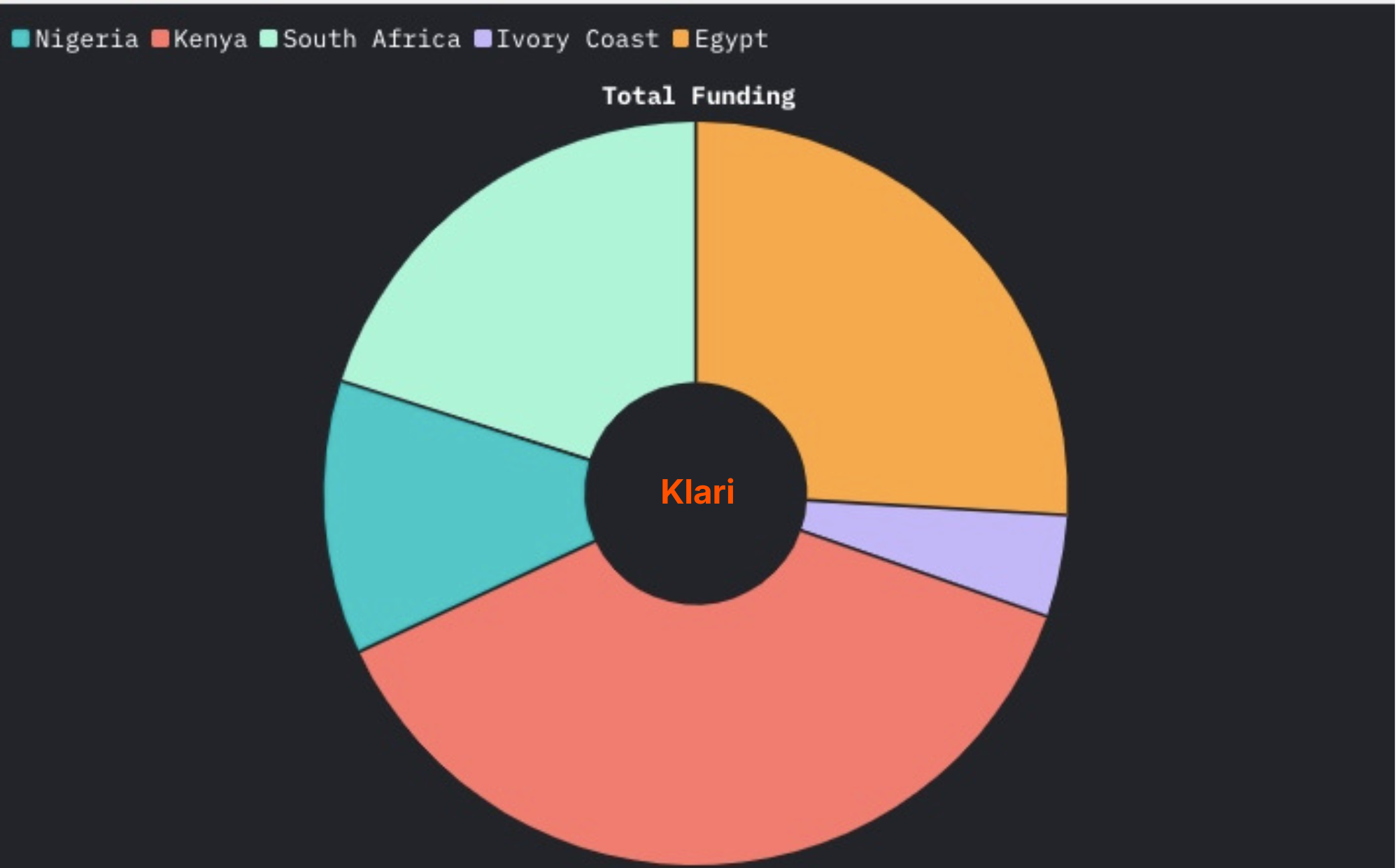
Kenya recorded the highest amount of disclosed startup funding in H1 2026, with $398.4 million raised across 25 disclosed deals.
The country's position was driven largely by Mobility company Spiro, which accounted for three of the largest funding rounds of the period.
The top funding markets by disclosed capital were:
- Kenya, with 25 deals totalling $398.4M
- Egypt, with 22 deals totalling $274.5M
- South Africa, with 20 deals totalling $212.8M
- Nigeria, with 56 deals totalling $126M
- Ivory Coast, with 3 deals totalling $47M
- Morocco, with 11 deals totalling $32.1M
Though occupying 4th in terms of disclosed capital, Nigeria remained ahead when deal activity is measured, recording 56 disclosed funding deals, more than any other African market.
This highlights an important difference:
- Kenya attracted more capital because of larger rounds.
- Nigeria continued to produce the highest volume of startup funding activity.
3. Mobility overtook Fintech as Africa's largest-funded sector
Fintech has dominated African startup funding for years.
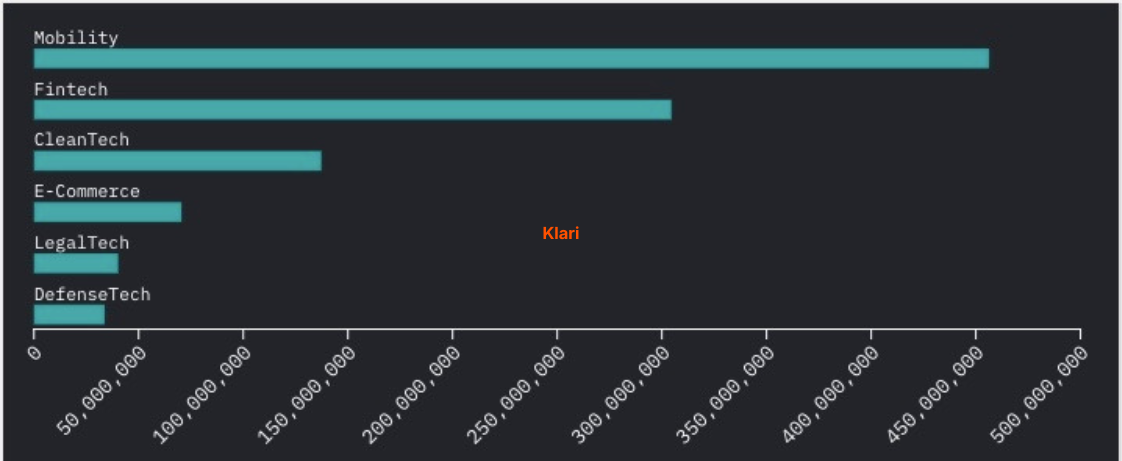
However, in H1 2026, Mobility became the largest sector by disclosed capital raised, attracting $456.2 million. This was largely driven by Spiro's four funding rounds, which accounted for over 70% of the total funding raised.
The largest-funded sectors were:
- Mobility: $456.2M
- Fintech: $304.5M
- CleanTech: $137.2M
- E-Commerce: $70.4M
- LegalTech: $40.2M
Despite losing the top spot by capital, Fintech remained the most active sector by number of deals with a total of 35.
4. Ivory Coast returned to Africa's startup funding conversation
Ivory Coast recorded $47 million in disclosed startup funding across three deals in H1 2026, making it one of the strongest-performing Francophone African markets during the period.
The country's funding activity was driven almost entirely by GoCab, a Mobility and Fintech company that secured two major financing rounds in February:
- $15 million equity investment from E3 Capital and Janngo Capital
- $30 million debt financing from Cur8 Capital
Cauridor's $2 million Series A investment from Proparco in May completed Ivory Coast's H1 funding activity.
The $47 million raised puts Ivory Coast back around funding levels last seen during the country's stronger 2021 funding period.
For a market that has historically attracted less venture capital than Africa's largest ecosystems, the size and structure of these deals stand out.
GoCab's ability to attract both equity and debt financing from institutional investors also highlights an important shift: startups in Francophone West Africa are increasingly accessing different forms of growth capital.
5. Gozem further cemented its position as Togo's most-funded startup
Togo recorded $24.6 million in disclosed startup funding in H1 2026, with almost all of the capital coming from Gozem.
The Togo-based super app, which operates across mobility, delivery, logistics, and digital financial services, raised $24.5 million in debt financing in April 2026.
The raise further strengthens Gozem's position as Togo's largest publicly disclosed startup funding recipient.
Operating across markets including Togo, Benin, and Cameroon, Gozem has expanded beyond ride-hailing into a broader digital services platform serving everyday needs across Francophone West Africa.
Togo remains a relatively small startup ecosystem compared to markets such as Nigeria, Kenya, Egypt, and South Africa. However, Gozem's continued ability to attract significant capital shows that companies from smaller ecosystems can still build regional businesses capable of attracting institutional investors.
6. Debt continues growth as a funding instrument in Africa
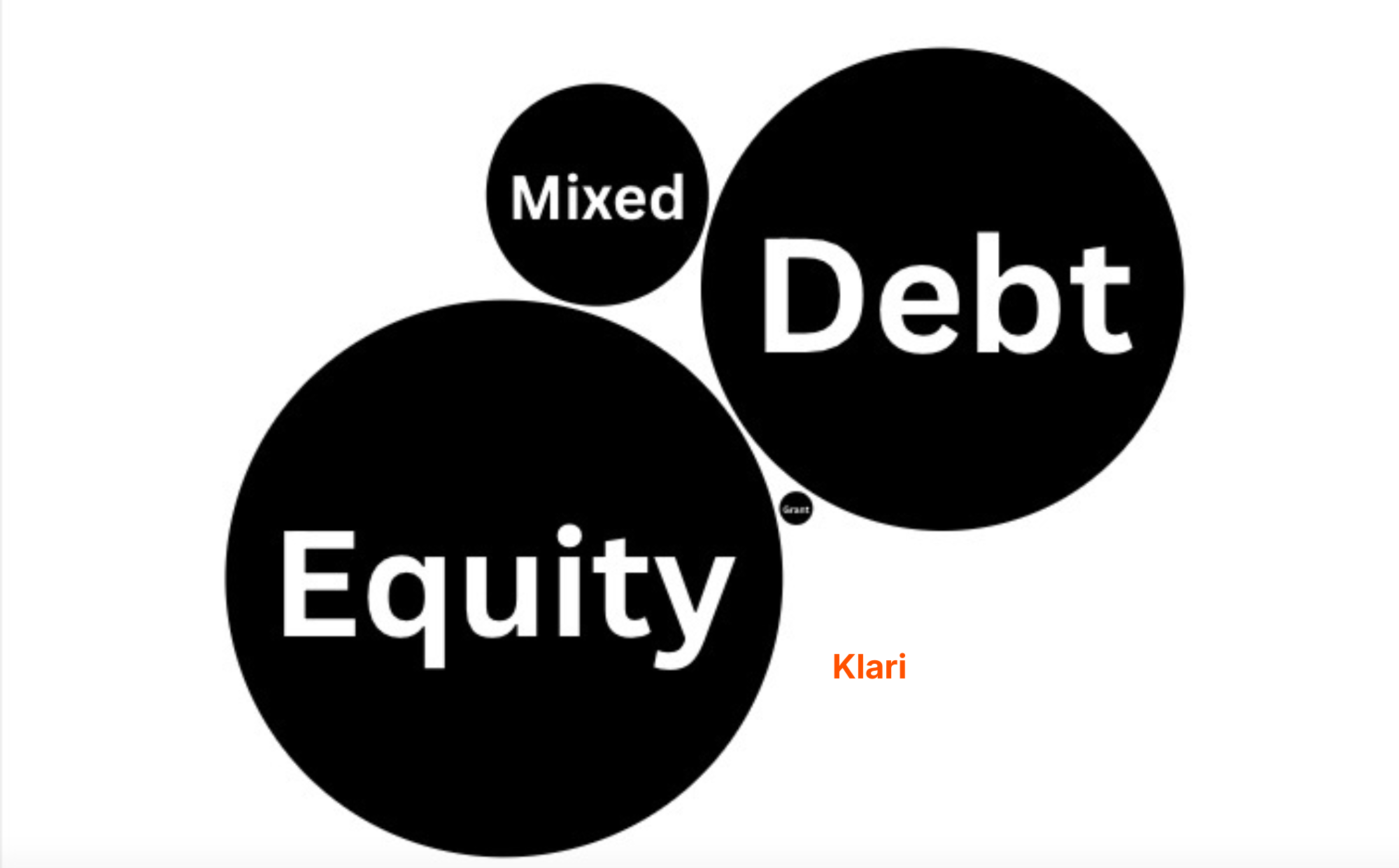
Of the $1.19 billion in disclosed funding, equity accounted for 52.24% ($621.2 million) and debt accounted for 39.25% ($466.8 million). Mixed rounds made up a further 8.32% ($99 million) while Grants represented less than 0.18% of capital i.e. $2.2 million
Debt has been growing as a funding instrument in African tech for several years. Partech Africa's 2025 annual report noted that African venture debt reached a record $1.64 billion in 2025, a 63% year-on-year increase.
The H1 2026 data suggests that trajectory has continued into 2026 and that debt is now a primary instrument, not a secondary one.
The largest debt financing rounds included:
- SolarAfrica, South Africa: $91.8M
- valU, Egypt: $63.6M
- Spiro, Kenya: $50M
- MNT-Halan, Egypt: $41.3M
- GoCab, Ivory Coast: $30M
- Nala, Tanzania: $25M
- Gozem, Togo: $24.6M
The increased use of debt reflects a maturing startup ecosystem. As more companies move beyond the early stages of building products and acquiring customers, many require larger amounts of capital to expand operations, purchase assets, or enter new markets.
For some startups, debt provides a way to access growth capital without immediately giving up additional ownership.
What's also notable is how broadly debt has spread. Debt is no longer something only large, revenue-generating Fintechs use; it is appearing in AgriTech, CleanTech, Mobility, and Logistics at a range of deal sizes.
7. Female founders continued to represent a small share of funded startups
Female-founded companies represent 11.76% of deals by count and less than 1% of disclosed capital ($10.5 million).
The largest deal for an all-female team was Aethex (Nigeria) at $3 million. A significant share of female-founded company funding came through grants and debt rather than commercial equity.
The gap between deal count (11.9%) and capital share (0.89%) is the most important figure in this section. Female founders are securing funding events but the average size of what they are raising is far smaller than the overall dataset average, and they are largely absent from the larger commercial rounds.
According to Briter Bridges' research on African VC gender trends, male-led teams have captured an average of roughly 90% of all African venture capital over the past five years.
The H1 2026 data at 95.25% for all-male teams suggests no material improvement.
8. A defense startup raised funding twice, an uncommon event in Africa's venture market
Defense technology rarely appears in Africa's startup funding conversations.
While sectors such as Fintech, Mobility, and HealthTech regularly attract venture capital, startups building security, surveillance, and defense-related technologies have historically received limited attention from investors.
H1 2026 stood out with the funding of Terra Industries, a defense technology company that raised $33.75 million across two rounds from investors such as Lux Capital and 8VC.
The raise is notable because defense-focused startups face unique challenges compared to traditional venture-backed companies. These include longer sales cycles, government procurement processes, regulatory requirements, and the need for specialised expertise.
However, growing security challenges across the continent — from border protection and infrastructure security to cybersecurity and autonomous systems — are creating new opportunities for technology companies operating in this space.
The funding also reflects a broader global trend where investors are showing increasing interest in "dual-use" technologies: solutions that can serve both civilian and security applications.
9. A changing funding landscape
The H1 2026 funding data suggests that the African startup ecosystem is entering a more diverse financing phase.
Five years ago, startup funding conversations were largely centred around venture capital equity rounds. Today, companies are combining:
- Venture capital
- Venture debt
- Asset financing
- Development finance
- Strategic investments
This shift is particularly visible in sectors such as:
- Mobility, where companies require significant operational investment.
- CleanTech, where infrastructure and asset financing are important.
- Fintech, where lending businesses often require additional capital to grow.
The future of African startup funding will not be defined by equity alone. Companies are increasingly combining different financing tools to reach scale.
Data Limitations and Methodology
What this dataset covers
This report tracks funding deals involving African tech startups announced between January 1 and June 30, 2026.
Data was collected from publicly available sources, including company announcements, investor announcements, press releases, and credible technology publications such as TechCabal, Techpoint, Disrupt Africa, Condia and WeeTracker.
Disclosed funding only
Of the 177 funding deals tracked by Klari during H1 2026, 43 deals (24.3%) did not publicly disclose the amount raised.
The $1.195 billion funding total reported in this analysis reflects only the 134 deals where funding amounts were publicly confirmed. The actual amount raised by African startups during this period is likely higher, as some companies choose not to disclose their financing details.
Funding stage disclosure
Funding stage information remains limited across the African startup ecosystem.
Only 46 deals (26%) in Klari's dataset publicly disclosed their funding stage, while 131 deals did not provide stage information.
Where funding stage was unavailable, Klari does not estimate or infer the stage based on deal size. This ensures that stage-based analysis reflects only confirmed information.
Sector classification
Startup sectors were standardised from raw company descriptions to create consistent analysis.
For example:
- CleanTech
- ClimateTech
- Energy-tech
were grouped under CleanTech.
Where a company operates across multiple sectors, Klari assigns the sector that best represents its primary business activity.
Country attribution
Country classification is based on a startup's primary country of operations, rather than its legal incorporation location.
This approach better reflects where companies are building products, serving customers, and contributing to local startup ecosystems.
What this dataset does not include
This report does not include:
- Funding rounds that had not been publicly announced by June 30, 2026
- Transactions that occurred but were never publicly disclosed
- Internal company restructurings
- Non-funding equity transactions
Comparison with other funding trackers
Different funding databases may report different totals for the same period due to differences in sourcing, timing, and inclusion criteria.
For example, TechCabal Insights reported $1.44 billion in African startup funding for a similar H1 2026 period while .
The difference between Klari's figure and other trackers reflects variations in:
- Deals captured
- Timing of data collection
- Source verification processes
- Inclusion criteria
Klari's database is continuously updated as previously undisclosed deals are confirmed and new information becomes available.
All 177 deals in this report are searchable, filterable, and downloadable at Klari for free, with no login required.