Pre-seed rounds are becoming scarce in Africa. Here's why
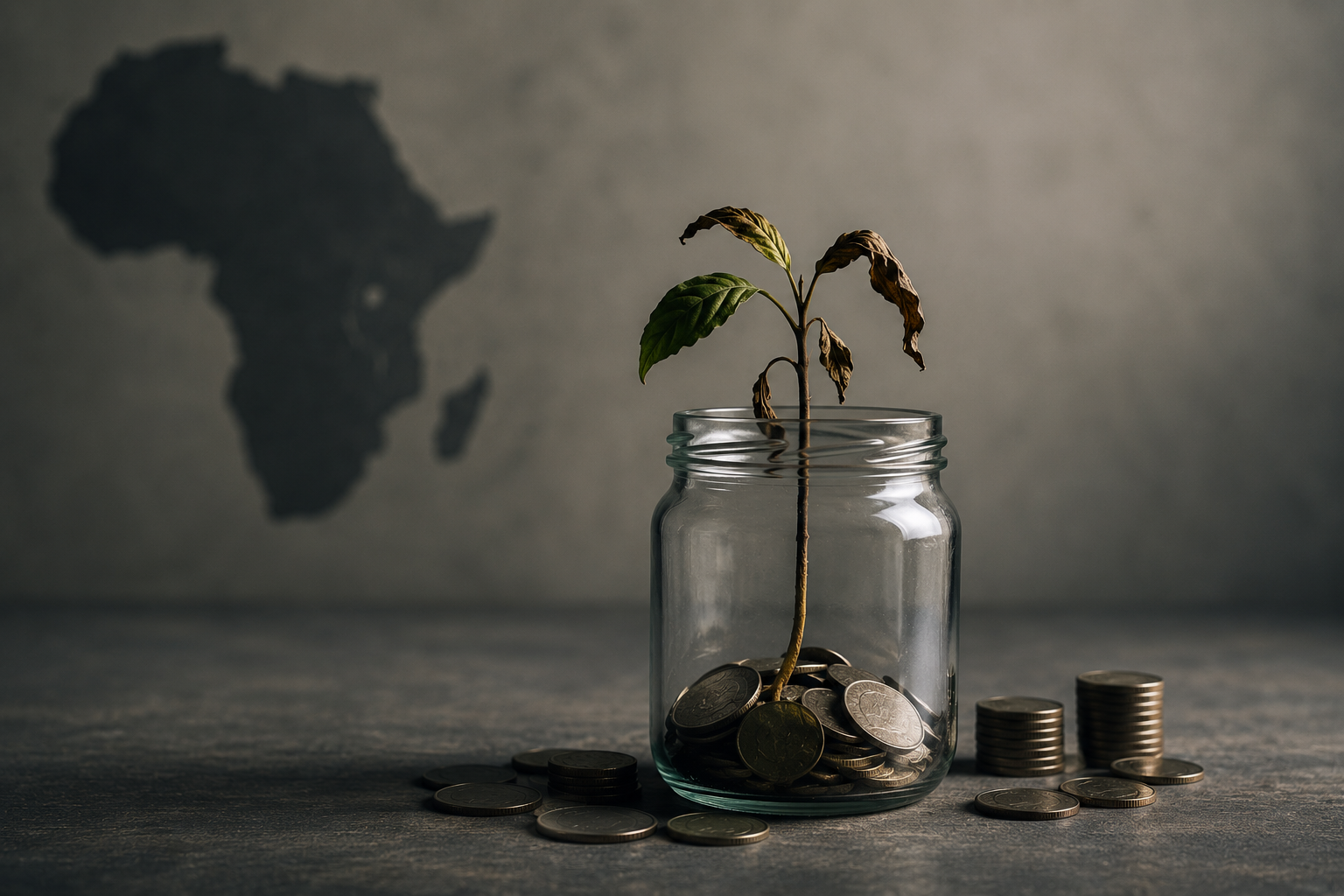
If you are a founder trying to raise early-stage capital in Africa right now, you have likely noticed a chilling shift. The money isn't flowing the way it used to. Ideas that would have easily secured funding three or four years ago are now getting rejected.
The data bears this out. Across the continent, the steepest decline in venture capital hasn't just been the total dollar amount, but the sheer number of small deals. Deals under $500,000 have cratered — over the past 12 months, only 130 early-stage startups have announced funding of between $100,000 and $500,000 in equity, the lowest 12-month total since at least 2021. Early-stage rounds made up 87% of total equity funding in 2024; by mid-2025, that share had fallen to 61%.
The classic "pre-seed round" is becoming an endangered species. Here is why the funding landscape has fundamentally changed and what it means for founders.
1. The Post-ZIRP Flight to Safety
To understand what is happening in Lagos, Nairobi, or Cairo, you have to look at global macroeconomics. For years, the world operated under a ZIRP, short for Zero Interest Rate Policy — in the US, this ran from December 2008 through December 2015, and again from March 2020 until March 2022 during the COVID-19 pandemic.
With interest rates near zero in developed markets, capital was incredibly cheap. Investors flooded into high-risk, high-reward emerging markets, chasing massive growth.
Today, interest rates are higher globally. Capital is no longer free. Global venture capital experienced an unusual boom from 2021 to 2022, driven by low interest rates and excess liquidity. But when central banks raised rates sharply in 2022 and 2023 to fight inflation, that easy money dried up, and investors pulled back hard from risky emerging markets, with Africa feeling that pullback harder than most
This has triggered a massive "flight to quality and safety." Investors are no longer willing to gamble on unproven ideas. They want certainty, and that means pulling back from the earliest, riskiest stages of company building.
2. The Great Milestone Inflation
Because capital is scarce, the definition of "pre-seed" has been completely rewritten. The goalposts haven't just moved; they've been transplanted to a different stadium.
-
The Old Playbook: A relatively unknown founder with a slick pitch deck could raise a $250,000 pre-seed round to go build a product.
-
The New Reality: What used to qualify as a Seed milestone is now required just to get a Pre-Seed meeting.
Today, institutional investors expect you to have already built the first version of your product (a Minimum Viable Product, or MVP). More importantly, they want to see early user retention and proof that customers are actually willing to pay for it.
3. The Death of "Growth at All Costs"
During the ZIRP boom, global VC funds happily subsidized user growth. The mantra was simple: acquire as many users as possible, dominate the market, and figure out how to make money later.
In Africa, that strategy hit a wall. Low consumer purchasing power, currency fluctuations, and unique infrastructural hurdles mean that "free users" rarely convert into profitable customers.
Investors have learned their lesson. They are no longer funding the "discovery" phase of a business. They want to see sustainable unit economics from day one. If your business model relies on burning VC cash for five years before turning a profit, you will find a very cold reception in today's market.
4. A Shift to Local, Conservative Capital
As large, international venture funds pulled back from the continent, local African investors, angel networks, and African corporates have stepped up to fill the void.
The swing has been dramatic. African corporate investors' share of venture commitments rose from just 7% between 2022 and 2024 to 41% in 2025. Over the same window, European investors — historically the largest source of venture commitments into African funds — saw their share collapse from 70% down to 21%. Separately, African investors overall accounted for 45% of total venture fund commitments in 2025 — the highest share on record, and nearly double the 23% average seen between 2022 and 2024.
Development Finance Institutions (DFIs) themselves have actually pulled back too, not just international funds — their share of commitments fell from roughly 45% (2022–2024) to 27% in 2025, as European development agendas increasingly shift toward climate finance and energy transition investments. The investors actually filling the gap are African corporates and growing pools of private wealth.
This is a double-edged sword. Local investors understand the operational realities of the ground far better than an investor sitting in San Francisco. However, because they understand the risks, they are naturally more conservative. They cannot afford to lose capital on raw concepts. They demand real, tangible traction before writing a check.
What This Means for Founders
The "pre-seed squeeze" sounds bleak, but it doesn't mean entrepreneurship in Africa is dead. It just means the era of the pampered startup is over.
Founders can no longer view external capital as the starting line. Capital is now the fuel you get after you've proven the engine works. To survive and build in this new environment, founders must become hyper-resourceful:
-
Leverage No-Code and Open-Source: Use open-source tools, no-code frameworks, or basic software to build a scrappy MVP yourself, rather than trying to raise external capital which isn't guaranteed.
-
Focus on Revenue early: The best source of funding isn't a VC; it's a paying customer. Validate your idea by getting people to pay for a scrappy version of your service before you write a single line of code.
-
Lean on Angel Networks: Look for local operators and mentors who can write smaller $5,000 to $10,000 checks to help you get off the ground, rather than chasing institutional VC firms too early.
The bar is higher than it has ever been. But the companies that manage to launch, acquire customers, and survive this pre-seed bottleneck will be some of the most resilient, fundamentally sound businesses the continent has ever seen.
Want to see how funding by stage has shifted over time? Search pre-seed and seed deals directly on Klari — it's free, filterable, and no is login required